

Conventional vs Flex Office Space: Key Differences

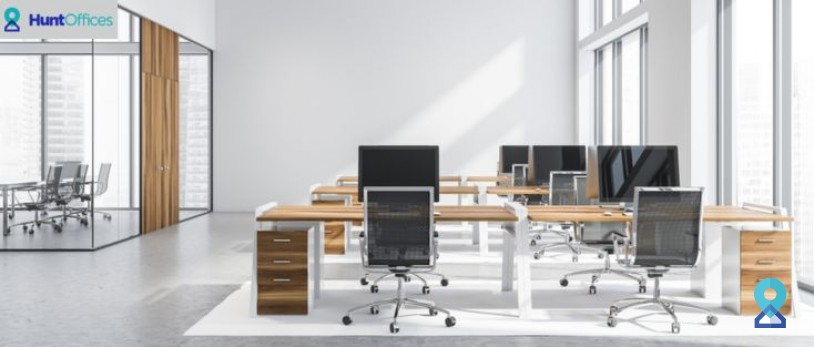
The Office Space Revolution
After the pandemic, businesses began looking at work from a completely different perspective. The question of “where we work” was rethought and redefined as organisations, employees and entrepreneurs adapted to new ways of working. In previous years, the traditional office was widely considered the standard and most legitimate workplace. Businesses typically committed to long-term leases, fixed office layouts and conventional working arrangements, with employees expected to work from the same location every day.
However, the modern workplace has changed significantly. Today, businesses are looking for greater flexibility, freedom from rigid workplace structures and spaces that allow employees to carry out their responsibilities comfortably and efficiently. The rise of remote and hybrid working has demonstrated that productivity does not necessarily depend on being confined to a traditional office environment. Instead, employees and businesses increasingly value flexible workspaces, collaborative environments, convenient locations and access to professional facilities.
The Legacy of Tradition vs. Flexible Office Spaces
The traditional vs. flexible office spaces debate isn't only about the arrangement of furniture-it's about two different work cultures that businesses are following. The undisputed office was created by the thoughts of industrialisation: people working at the same old desks, set hours, and floors following the same order as the organisational chart. Such spaces have emphasised control rather than encouraging innovation and have been focused on being physically present over efficiency.
Then came the revolutionary: flexible places to work which are instrumental to human needs instead of constraining institutional behaviors. These places accept that creativity doesn't stop for a timeclock, and innovation doesn't come always on time. The change of a philosophy into the material form can be seen in the adoption of flexible layouts, furniture that can be moved, and spaces that are defined by the happening not by the arranged use.
The Financial Equation: Rethinking Workplace Economics
One of the most defensible reasons for businesses to switch is the simple fact that it makes financial sense. A comprehensive cost comparison: conventional vs. flex offices shows some eye-opening, tiniest details of the real charge of the office infrastructure.
When it comes to traditional offices, the usual arrangement is that companies sign multi-year leases, thus taking on all the market risks. Additionally, apart from the substantial upfront investment in furniture, technology, and infrastructure, finances are also used for the continuous maintenance of the systems. Now the financial load is huge. These fixed costs can create tough situations in the future, especially during economic downturns or times of organisational change.
The benefits of flex office spaces are evident in the financial model they offer. Flexible office solutions are against this model. Instead of the expenses being in the form of capital, companies can choose to use professional workplaces, through membership or short-term agreements, which are fully equipped. The comparison of costs: Conventional vs. flex offices becomes particularly beneficial when taking into consideration the invisible items (utilities, security, cleaning services, technology infrastructure)-all of which are usually part and parcel of flexible workspace agreements.
The Human Experience: Where Value Creation Happens
The most forward-thinking companies understand that the arrangement of the workplace affects the level of success in the innovation process. The lifeless and monotonous environments of the past are now rapidly giving way to constantly evolving places that are capable of tuning to various work styles. The benefits of flex office spaces not only cover the physical environment, but they also extend to people's thoughts, collaboration, and the generation of value.
These places are the ones that recognise the fact that different types of tasks are carried out in different settings. For example, some work requires a high degree of concentration and a distraction-free environment; others get a boost from the energy of a joint creative process and spontaneous interaction. The advantages of flex office spaces include the fact that people can move smoothly from one of these modes to the other, depending on the work needed to be done, without the need to interfere with every activity in an equal manner in a one-size-fits-all setting.
This newness is seen in the form of positive and orderly employee turnover, customer acquisition followed by satisfaction, and "usually higher than before" employee satisfaction. For instance, when a company switched to a flexible working set-up, it saw only 13% of its staff quitting annually, as opposed to 25% under the traditional working environment. It is true that when the staff owns the freedom of deciding where and how to do their job, they show genuine concern and commitment to the organization.
How Do Conventional and Flex Offices Compare?
| Factor | Conventional Office | Flex Office |
|---|---|---|
| Lease terms | Usually longer | More flexible |
| Setup | Business manages setup | Ready-to-use |
| Furniture | Usually self-arranged | Typically furnished |
| Maintenance | Business responsibility | Managed by provider |
| Scalability | Can take more time | Easier to scale |
| Best for | Established long-term operations | Startups, SMEs and growing teams |
Discovering the Right Balance for your Business
It's not that the future means an end to the structure completely, but it is built on having an arrangement that would serve you well. A variety of businesses are now moving into this era with a mix of facilities: an office in a regular location, where they operate, and a set of workspace units that are flexible.
Advanced management is going beyond superficial space calculations and the like. How is the environment visualizing what the company stands for? What kind of office design is the best for the employees? How can our workplace become our competitive advantage? It is not the traditional office settings that suit these questions.
It is therefore the reason why businesses prefer flexible workspaces due to more reasons other than money. These places are a symbol of trust that employees are allowed to decide where they can be most productive. Likewise, they are performance-oriented and future-oriented. They also allow employees with different work patterns and needs to work, thus, attracting the best talent.
FAQs
1. What is the difference between conventional and flex office space?
Conventional offices usually involve longer leases and greater responsibility for setup and management, while flex offices offer furnished, ready-to-use workspaces with more flexible terms.
2. Is flex office space cheaper than a conventional office?
Flex offices can reduce upfront costs because businesses generally avoid significant spending on furniture, office setup and facility management.
3. Who should choose a flex office?
Flex offices are well suited to startups, freelancers, SMEs, remote teams and businesses that expect their workspace requirements to change.
4. Can a flex office accommodate a growing team?
Yes. One of the main advantages of flex office space is the ability to increase or adjust workspace according to changing team requirements.
5. Is a flex office better than a conventional office?
It depends on the business. Flex offices are generally better for businesses prioritising flexibility and convenience, while conventional offices may suit organisations seeking long-term control over their premises.
The Verdict: Flexibility as Strategic Advantage
The transition to flexibility is not just a passing trend, but rather a radical change in the mindset of what "office" means today in the era of digitalisation. Why businesses prefer flexible workspaces stands at the beginning of the road with tactical benefits, but at the end of it, a strategic repositioning for the future is revealed. While the uncertainties in business are rising, the ability to expand or contract the workspace without any punishment acts as the most major leverage for an organization. The organisations that adhere to the flexible work environment notion send a powerful message to the market and potential employees that they embrace the changes, trust their people, and care more about results than face value. The companies in the vanguard of this movement are not only changing their work locations but also, they are revolutionizing their way of working and, in the end, their potential. Flexible vs. traditional office spaces don't just represent a property matter; it circle cultural values and foresight of where it is all heading. The question is no longer whether your organization will be adjusting to this new reality, but how rapidly your company will benefit from it. In the times when employees increasingly can select not just the place but also the way how they work, it is more than necessary that environments must be created that people really want to be part of it instead of only a good wish-it is necessary to survive competition.
COWORKING SPACES
Coworking Space Near MNC Chennai
Finding the right workspace in Chennai is more than just finding the right desk space. The selection of office spaces can...
Read MoreCOWORKING SPACES
MNC Companies in Gurgaon: Complete 2026 Guide
Quick Answer: MNC companies in Gurgaon are represented in five micro-markets, which include DLF Cyber City, Golf Course Road, MG Road/Si...
Read MoreCOWORKING SPACES
Virtual Office vs. Coworking Space: Which One Saves You More?
With companies seeking cost-effective office spaces, the issue is no longer just about the price of offi...
Read MoreCOWORKING SPACES
The Best Coworking Spaces for Freelancers Near Me in 2026
Quick Answer: Top coworking spaces for freelancers in 2026 offer a combination of three vital fac...
Read MoreCOWORKING SPACES
Best Coworking Space Near Me: A Complete 2026 City Guide
Quick Answer: The ideal coworking space near me in 2026 essentially depends on three fa...
Read More