

Futuristic Office Design in Mumbai | Hunt Offices

Quick answer
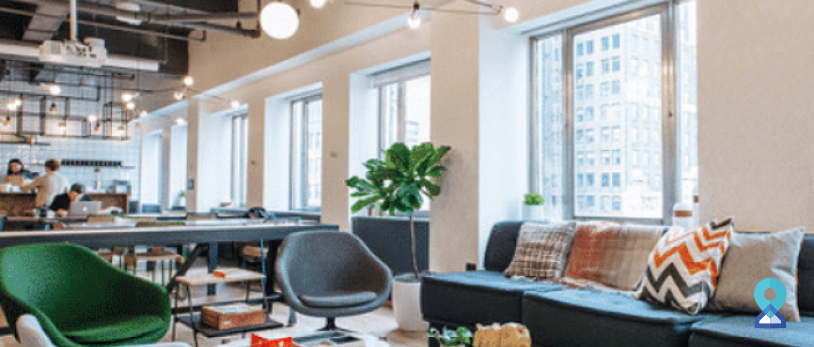
Futuristic office design in Mumbai matters because workplace expectations have shifted from fixed desks to flexible, technology-enabled space that supports both collaboration and focus. The strongest evidence-backed trends are hot-desking, informal "collision zones" for spontaneous conversation, biophilic elements like plants, occupancy-sensing technology, and a mix of open and private areas - each with a measurable effect on productivity or wellbeing, not just aesthetics.
- Best for: companies designing or choosing serviced office space in Mumbai, Delhi or Pune
- Best-evidenced trend: adding plants to a plain office - a University of Exeter field study found a 15% productivity increase
- Underlying shift: laptops and Wi-Fi have freed employees from fixed desks, and office design is catching up
Workplaces have changed. When you picture a workspace today, it's no longer a large desktop computer with an employee fixed to it - Wi-Fi, laptops and tablets mean employees aren't tied to one spot any more. What actually makes office space in Mumbai, Delhi or Pune work well for a modern organisation isn't a single feature, but a set of design choices that support how people genuinely work.
Why has office design changed so much?
The right physical environment gives employees the conditions and motivation to tackle demanding work - and that environment looks very different from a decade ago. As laptops and wireless connectivity removed the need for a fixed desk, office design shifted from optimising for individual seating to optimising for movement, focus and collaboration in the same footprint. The trends below are the practical result of that shift.
What are 7 evidence-backed office design trends?
1. Hot-desking
Hot-desking means no permanently allocated seat - employees choose from open desks, workstations or informal seating areas each time they come in. It works best where a company needs different types of space that can be easily reconfigured, and suits organisations with hybrid or flexible attendance patterns rather than a fixed daily headcount.
2. Collision zones
Deliberately designed "collision zones" - shared kitchens, open staircases, lounge corners - increase the odds that employees from different teams run into each other informally. Genuinely useful ideas rarely emerge from someone sitting alone in front of a screen; they tend to come from exactly this kind of unplanned conversation.
3. Colour
Different colours are associated with different emotional and cognitive effects, and the right colour choice in an office has been linked to improved focus and output, varying by the type of work being done. There's no single "correct" office colour scheme - the right choice depends on whether the space is used mainly for deep focus, collaboration, or client-facing meetings.
4. Amenities
Today's employees are more discerning about where they choose to work, and workplace priorities have shifted from sheer room size to amenities, convenience of location, and how the space affects employee wellbeing. Serviced and managed office providers in Mumbai increasingly compete on these amenities as much as on rent per square foot.
5. Green spaces (biophilic design)
An environmentally considerate office communicates that an employer genuinely values its people's comfort - and the effect isn't just perception. A field study by the University of Exeter, published with Cardiff University and the University of Queensland, found that adding plants to a plain, "lean" office increased measured productivity by 15%, alongside improvements in concentration and perceived air quality.
6. Technology and occupancy sensing
Occupancy sensors that genuinely detect how space is being used let organisations measure their real space requirements accurately, rather than estimating. That data helps companies put underused space to more effective purposes, and can meaningfully reduce wasted lighting and power costs.
7. Private yet open spaces
Research increasingly suggests both the fully open office and the isolated cubicle have had their day - the office of the future needs space that feels open without sacrificing genuine privacy. Ambient sound can help create a sense of privacy without physical walls, and glass partitions or acoustic booths now let companies offer private space for calls or focused thinking without reverting to a maze of closed cabins.
The underlying principle: the office of the future isn't about technology for its own sake - it's about building space that genuinely helps people do better work, whether that's through a plant on a desk, an informal meeting corner, or an acoustic booth for a client call.
Who should care about office design trends like these?
These trends matter most for companies actively choosing or fitting out serviced office space in Mumbai, Delhi or Pune - particularly growing businesses evaluating providers, and HR or facilities teams responsible for employee experience. A provider that has clearly invested in these design principles is often a more reliable long-term choice than one competing purely on price per desk.
Frequently asked questions
Do plants in an office actually improve productivity?
Yes - a field study by the University of Exeter, Cardiff University and the University of Queensland found that adding plants to a plain office increased measured productivity by 15%, alongside gains in concentration and perceived air quality.
Is hot-desking suitable for every business?
Not necessarily - it works best for organisations with flexible or hybrid attendance patterns and space that can be easily reconfigured, rather than teams that need a fixed daily seat.
What's a "collision zone" in office design?
A deliberately designed shared area - a kitchen, lounge corner or open staircase - intended to increase the chance of informal, unplanned conversations between employees from different teams.
Is a fully open-plan office still considered good design?
Not on its own - current thinking favours a mix of open and private space, using acoustic booths or glass partitions to offer privacy for calls and focused work without reverting to fully closed cabins.